Local governments accelerate business growth through strategic real estate policies. Key actions include streamlining permits, offering tax incentives, revitalizing downtowns with mixed-use developments, and collaborating with business networks. Investing in infrastructure like transportation and digital connectivity is crucial for accessibility and talent attraction. Providing mentorship programs and capital access aids small businesses. These initiatives create dynamic neighborhoods, attract investments, and stimulate economic development through diverse, sustainable growth.
The health of a community’s business environment significantly influences its overall prosperity and quality of life. However, local governments often face challenges in fostering an attractive climate for enterprises, hindering economic growth. One critical sector that reflects and supports this ecosystem is real estate, which can either boost or burden local economies. This article delves into the strategies and initiatives that local authorities can implement to cultivate a thriving business environment, exploring how investments in infrastructure, streamlined regulations, and partnerships with private entities can drive economic vitality, attract new businesses, and create sustainable growth—ultimately ensuring a robust and resilient community for all.
Strategies for Local Governments to Foster Business Growth

Local governments play a pivotal role in fostering business growth within their jurisdictions. One of the key areas where they can make a significant impact is through strategic interventions in the real estate sector. By leveraging market insights and public policy, local authorities can drive economic development by attracting businesses and creating conducive environments for entrepreneurship. For instance, cities like Austin, Texas, have experienced substantial job growth due to their proactive urban planning and incentives for tech startups, which has transformed underutilized areas into thriving business hubs.
A practical strategy involves implementing policies that streamline the permitting process for new businesses, especially in real estate development. Efficient approval systems reduce time and costs associated with setting up operations, encouraging investment. Additionally, offering tax breaks or rebates to businesses investing in specific zones can stimulate economic activity. These incentives have proven effective in revitalizing downtown areas and promoting mixed-use developments that cater to both commercial and residential needs. Local governments should also collaborate with regional business networks to identify emerging industries and adapt their strategies accordingly.
Moreover, investing in infrastructure, such as transportation networks and digital connectivity, is essential for fostering business growth. Well-connected locations enhance accessibility, attract a talented workforce, and support efficient logistics operations. For example, the expansion of high-speed rail networks has transformed regional economies by facilitating the movement of goods and people, leading to the emergence of new business clusters. Local governments should also consider providing mentorship programs and access to capital for small businesses, addressing the challenges faced by entrepreneurs at various stages of their ventures.
Real Estate: Driving Economic Development in Communities
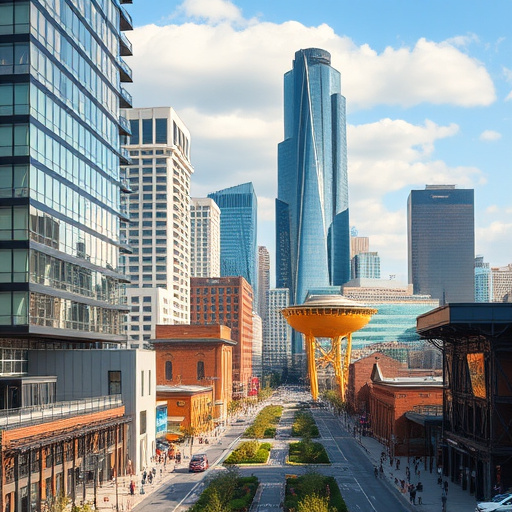
Real estate plays a pivotal role in fostering economic growth and development within communities, making it a key area of focus for local governments aiming to enhance their business environments. The strategic utilization of real estate can drive investment, create job opportunities, and attract new businesses, thereby revitalizing local economies. One of the primary mechanisms is through land use planning and zone designation, where local authorities can encourage mixed-use developments that combine residential, commercial, and retail spaces. This integrated approach not only adds vibrancy to neighborhoods but also reduces commute times, fostering a more connected and productive community.
For instance, cities like Seattle and Austin have implemented successful strategies involving real estate to boost their economies. Seattle’s downtown area has seen significant revitalization through high-rise residential towers interspersed with tech offices and retail hubs, attracting top talent and driving innovation. Similarly, Austin’s “Tech Hub” initiative focused on redeveloping underutilized industrial sites into cutting-edge coworking spaces and tech campuses, positioning the city as a major tech hub. These examples underscore the transformative power of strategic real estate investments in creating thriving business ecosystems.
Local governments can further incentivize real estate development by offering tax breaks, fast-tracking permitting processes, and providing grant funding for projects that meet specific criteria, such as sustainable design or affordable housing initiatives. By fostering a balanced and diverse real estate market, communities can support local businesses, encourage entrepreneurship, and ensure long-term economic stability. This includes facilitating the conversion of historic buildings into mixed-use spaces, promoting smart urban renewal, and encouraging developers to incorporate public art and green spaces into their projects, enhancing the overall quality of life while driving economic development.
Enhancing Infrastructure: A Key Role for Local Authorities
Local governments play a pivotal role in enhancing infrastructure, which is a critical aspect of fostering a robust business environment. Well-developed infrastructure not only facilitates economic growth but also attracts investments and supports the overall sustainability of communities. One key area where local authorities can make significant impacts is real estate. Modern and efficient urban planning, including the construction of modern office spaces, mixed-use developments, and state-of-the-art industrial facilities, can draw in businesses, create job opportunities, and increase tax revenues. For instance, cities like Singapore and Tokyo have consistently ranked as global leaders in infrastructure quality, reflecting their thriving business landscapes.
To achieve these objectives, local governments should prioritize strategic investments in transportation networks, digital connectivity, and public utilities. Upgrading roads, improving public transit systems, and expanding broadband access are essential steps towards creating a seamless and efficient operational environment for businesses. Additionally, local authorities can drive innovation by integrating smart city technologies into infrastructure development. This approach not only enhances the day-to-day operations of firms but also positions municipalities as forward-thinking hubs for entrepreneurship and technology adoption. A practical example is the implementation of smart grid systems that optimize energy distribution, reduce costs, and promote sustainable practices in industrial and commercial sectors.
Furthermore, local governments should collaborate with private sector partners to leverage their expertise and resources. Public-private partnerships (PPPs) can accelerate infrastructure development projects while ensuring cost-effectiveness and high-quality outcomes. By pooling financial and technical capabilities, local authorities can tackle large-scale initiatives, such as revamping aging industrial estates or constructing multifunctional community centers, that would be challenging to accomplish solely with public funds. Such collaborations also foster a sense of shared responsibility for the long-term success of local economies, ultimately driving business environment enhancements.