Local governments drive economic growth through strategic real estate development. Key strategies include niche market targeting, mixed-use zoning for urban revival, incentives for developers, public-private partnerships, and infrastructure investments. These initiatives attract businesses, foster innovation, create jobs, and promote sustainability, ultimately enhancing regional prosperity centered around high-quality real estate.
In today’s competitive economic landscape, fostering a robust business environment is paramount for local governments to drive sustainable growth. However, many regions struggle with attracting and retaining businesses, hindering overall development. This challenge is particularly evident in the real estate sector, where dynamic urban centers compete for investments while smaller communities seek revitalization. The solution lies in strategic initiatives that enhance infrastructure, simplify regulatory processes, and provide targeted incentives, thereby creating an environment conducive to entrepreneurial prosperity. By implementing these measures, local governments can unlock their regions’ full potential, fostering a vibrant ecosystem that attracts businesses and revitalizes communities.
Strategies for Local Governments to Foster Business Growth

Local governments play a pivotal role in shaping and enhancing their region’s business environment. Among various tools at their disposal, strategic planning and targeted initiatives in real estate development emerge as powerful catalysts for fostering economic growth. By meticulously designing urban landscapes, local authorities can attract businesses, stimulate job creation, and drive innovation. One successful strategy involves identifying niche markets and creating specialized hubs; for instance, tech startups might flourish in designated innovation districts with infrastructure tailored to their needs. This focused approach not only attracts investments but also fosters collaboration among like-minded enterprises.
Moreover, local governments can offer incentives and concessions to businesses investing in specific areas, encouraging the diversification of industries within their jurisdiction. Tax breaks, reduced fees, and streamlined permitting processes significantly lower the barrier to entry for new businesses. For instance, implementing flexible zoning regulations in underutilized neighborhoods can spark revitalisation, allowing mixed-use developments that combine retail, residential, and commercial spaces. Such policies create dynamic urban environments, attracting both local entrepreneurs and multinational corporations seeking prime locations.
Additionally, public-private partnerships are essential to achieving sustainable business growth. By collaborating with private developers and investors, local governments can leverage expertise and resources for large-scale projects. These partnerships could encompass the renovation of historic buildings into modern office spaces or the development of green initiatives that enhance the area’s appeal to eco-conscious businesses. Successful examples globally demonstrate that strategic investments in real estate, combined with supportive governmental policies, can transform underperforming areas into thriving business hubs, ultimately contributing to the overall prosperity of the region.
Real Estate: Key Role in Economic Development Plans
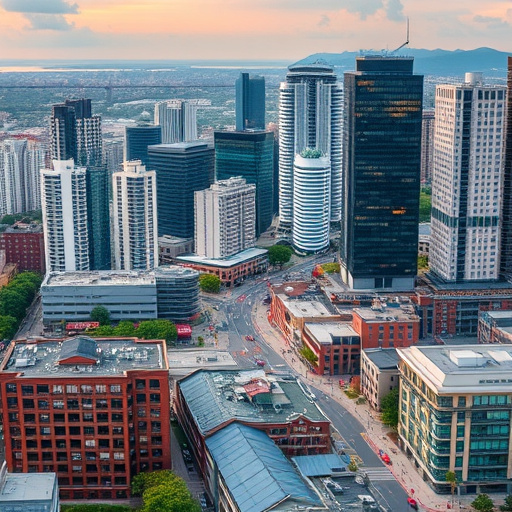
Local governments play a pivotal role in shaping the business environment through strategic real estate initiatives. In today’s competitive economic landscape, cities and towns are recognizing the inherent connection between vibrant real estate sectors and robust economic growth. Real estate naturally serves as a catalyst for development, attracting businesses, fostering innovation, and creating diverse job opportunities. For instance, major metropolitan areas like New York City and Singapore have leveraged their strategic land use to become global hubs for finance, technology, and creative industries, respectively.
A key aspect of enhancing the business environment through real estate involves intelligent zoning and master planning. Local governments can strategically designate areas for mixed-use developments, encouraging the coexistence of residential, commercial, and retail spaces. This integrated approach not only revitalizes urban centers but also promotes walkability and accessibility, reducing commute times and boosting productivity. For example, the transformation of brownfield sites into mixed-use communities in cities like Chicago has attracted a steady stream of startups and established corporations alike, contributing to local economic diversification.
Furthermore, providing incentives for real estate developers can significantly accelerate economic development. Tax breaks, streamlined permitting processes, and public-private partnerships can encourage the construction of modern office spaces, state-of-the-art manufacturing facilities, or innovative co-working hubs. Such initiatives have proven successful in attracting and retaining businesses, as seen in cities like San Francisco and Berlin, where strategic real estate policies have been instrumental in maintaining their positions as global tech hubs. By thoughtfully integrating real estate into economic development plans, local governments can create environments that foster business growth, attract investments, and ultimately drive community prosperity.
Enhancing Infrastructure for a Thriving Business Ecosystem
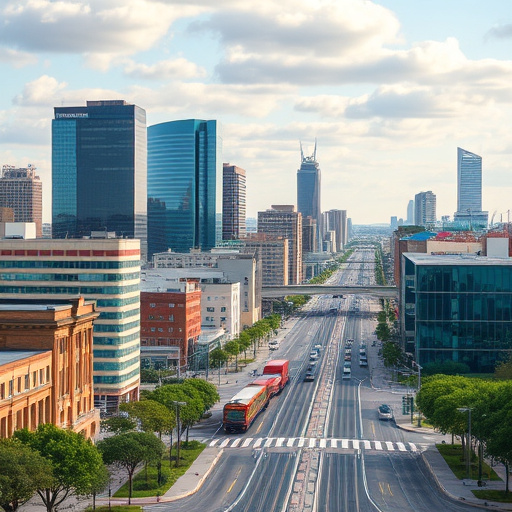
Local governments play a pivotal role in shaping a robust business environment, and one of their most effective tools is enhancing infrastructure. Investing in physical structures and systems creates a thriving ecosystem that attracts businesses and fosters economic growth. This strategy is particularly crucial in attracting industries to specific regions, with real estate being a key component. Modern, well-designed office spaces, industrial parks, and retail hubs become magnets for startups, tech giants, and traditional businesses alike, driving local economies forward.
A study by the Urban Land Institute reveals that cities prioritizing infrastructure development experience higher rates of commercial real estate growth. For instance, cities like Austin, Texas, have seen a significant boom in tech companies moving to purpose-built hubs, contributing to its reputation as a major tech hub. This trend underscores the impact of strategic infrastructure investments on business attraction and retention. Local governments can drive this transformation by identifying sectors for growth, such as technology or logistics, and developing specialized infrastructure to cater to these industries’ unique needs.
To implement effective infrastructure enhancements, local officials should collaborate with developers and businesses to understand market demands. This collaborative approach ensures that new projects are tailored to the specific needs of potential tenants, increasing their appeal. Additionally, leveraging smart city technologies can optimize existing infrastructure, making urban areas more attractive and efficient. Upgrading transportation networks, implementing digital solutions for utility management, and integrating renewable energy sources into public spaces not only enhance operational efficiency but also signal a commitment to sustainability, a growing concern among businesses.