Local governments significantly shape business environments through strategic interventions centered on real estate development as a key driver of economic growth. Key strategies include:
– Encouraging mixed-use projects to stimulate local economies and reduce urban congestion.
– Streamlining regulatory processes, including construction permitting, for business friendliness.
– Facilitating collaboration through networking events and business incubators.
– Forming public-private partnerships to provide affordable workspaces.
Integrated strategies lead to a robust local economy where real estate naturally serves as a catalyst for growth and stability.
In today’s competitive economic landscape, the health of a region’s business environment significantly impacts its overall growth and prosperity. Local governments play a pivotal role in fostering an ecosystem that attracts and retains businesses, ensuring a robust and diverse economy. However, many face challenges in effectively supporting entrepreneurship and industrial development, particularly within Real Estate sectors. This article delves into strategic interventions local authorities can implement to enhance the business climate, exploring innovative solutions to drive economic vitality and create thriving communities. By examining proven practices, we aim to provide valuable insights for governments seeking to boost their region’s competitive edge.
Strategies for Local Governments to Foster Business Growth

Local governments play a pivotal role in shaping their region’s business environment, with strategies to foster growth directly impacting economic prosperity. One key area of influence is through real estate development, which can stimulate local economies and attract businesses. Governments can facilitate this by offering incentives for mixed-use projects that combine residential and commercial spaces, promoting dense urban development to maximize land use efficiently. For instance, cities like Toronto have successfully implemented policies encouraging high-rise residential buildings with retail and office components, reducing congestion and providing a vibrant hub for enterprises.
Additionally, local authorities should streamline regulatory processes to create a business-friendly climate. Simplifying permitting procedures for construction projects, especially in the real estate sector, can significantly reduce time and costs for developers and investors. Digitalization of services, as adopted by many modern governments, enhances accessibility, speeds up interactions, and reduces red tape, fostering an environment conducive to entrepreneurial ventures. For example, e-permitting systems have been implemented in several US cities, leading to a 20-30% reduction in application times.
Networking events and business incubators are other powerful tools local governments can employ. Organizing such initiatives helps foster connections between startups, established businesses, and government bodies, creating a collaborative ecosystem that encourages innovation and expansion. Moreover, providing affordable or shared workspaces through public-private partnerships can alleviate the financial burden on new ventures, encouraging entrepreneurship and diversity in the business landscape. These strategies collectively contribute to a thriving local economy, where real estate development serves as a catalyst for growth and stability.
Enhancing Real Estate Markets: Policies for Success

Local governments play a pivotal role in shaping the health of their region’s real estate markets, which, in turn, significantly influences the overall business environment. Enhancing these markets requires strategic policies that attract investors, stimulate development, and create sustainable communities. One such policy involves streamlining zoning regulations to accommodate mixed-use developments, fostering an environment where residential, commercial, and retail spaces coexist harmoniously. For instance, cities like Austin, Texas, have successfully revitalized downtown areas by implementing inclusive zoning laws, leading to a boom in tech startups and creative industries.
Access to financing is another critical aspect. Local governments can collaborate with financial institutions to offer incentives such as low-interest loans or tax breaks for real estate investors, particularly those focusing on revitalizing urban centers. These measures not only stimulate investment but also encourage the development of more affordable housing options, a concern that often tops business and community agendas. Moreover, providing clear, digital access to property records can streamline transactions, making the market more transparent and attractive to both local and foreign investors.
Infrastructure development is key to long-term success in real estate. Governments should prioritize investments in public transportation, green spaces, and robust digital connectivity. For example, cities like Singapore have leveraged advanced infrastructure to position themselves as global real estate hubs, attracting multinational corporations and tech giants with their efficient transit systems and high-speed internet. Local governments can also partner with developers to create innovative, sustainable communities, incorporating smart city technologies that enhance quality of life while preserving the environment.
Building a Thriving Business Ecosystem: Key Initiatives
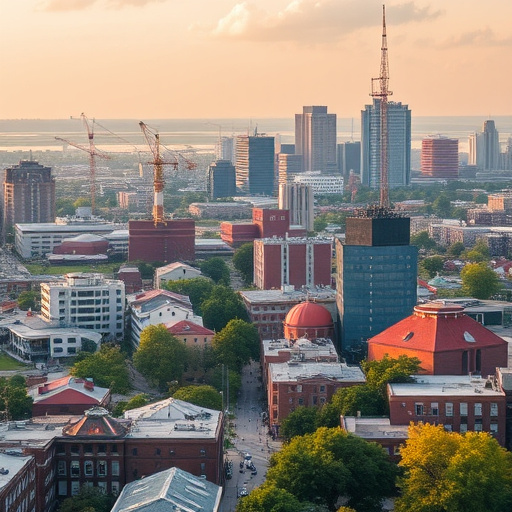
Local governments play a pivotal role in fostering a robust business environment, and one of the key areas of focus is building a thriving ecosystem that attracts and supports enterprises. This involves a strategic approach to develop various sectors, including real estate, infrastructure, and regulatory frameworks. By implementing targeted initiatives, cities can create an enabling atmosphere for businesses to flourish and contribute to economic growth.
One such initiative is the revitalisation of urban areas through smart development projects. This includes redeveloping underutilised spaces into mixed-use zones, incorporating green spaces and modern amenities. For instance, many municipalities are transforming former industrial sites into vibrant business hubs, complete with co-working spaces, startup incubators, and advanced technology infrastructure. These revitalised areas attract a diverse range of businesses, fostering innovation and collaboration. In addition to physical development, local governments should focus on streamlining permitting processes for real estate projects, ensuring efficiency and reducing bureaucratic hurdles. This encourages investment in new constructions, renovations, and expansions, thereby driving economic vitality.
Furthermore, establishing partnerships between the public and private sectors is essential. Local governments can collaborate with business leaders to create specialised business districts catering to specific industries. For example, tech hubs that offer incentives for startups and established tech companies to locate within certain neighbourhoods. Such initiatives not only attract businesses but also encourage job creation and skill development in targeted sectors. By implementing these strategic measures, local authorities can build a thriving business ecosystem that is resilient, diverse, and attractive to investors, ultimately contributing to the long-term success and prosperity of their communities.